The Shargei Initiative

Where American expertise meets Ukrainian need

We match Ukrainian cities, utilities and universities with American experts, technology and partner universities. All of our work is civilian.

Our mark follows the route to the Moon that a Ukrainian engineer worked out a century ago. His story

What we do

Three programs

Ukraine has clear civilian needs. American scientists, engineers and universities can meet many of them. Nobody was doing the matching, so we started.

Technology transfer

We bring proven American civilian technology to Ukrainian sites that need it. The research is already done. We help it reach the field.

Example: turbines placed inside existing water mains make electricity from water that is already flowing, underground and hard to strike.

More on technology transfer

Expert advisory panels

Senior American specialists answer questions from Ukrainian engineers, online and free of charge. Ukrainian teams keep every decision.

Example: our water panel advises Ukrainian utilities on keeping drinking water safe when plants are damaged.

More on advisory panels

University partnerships

We pair Ukrainian and American universities. American professors teach in Ukraine. Ukrainian students study a semester in the United States and come home to graduate.

Example: Kyiv Polytechnic Institute and Drexel University have matched courses so credits earned in Philadelphia count toward a Kyiv degree.

More on university partnerships

One match, start to finish

A water utility asks for help

This is how our advisory panel worked on one of its first questions, in September 2026.

  1. The need

    The chemicals were running low

    A regional Ukrainian water utility learned that its supply of water treatment chemicals could run out within one or two months.

  2. The match

    We put the question to our panel

    Ukraine's national water authority approved the consultation. Two of our American experts joined the utility's engineers online.

  3. The answer

    Written guidance followed

    The experts sent a reference design from a large membrane plant in San Diego and options for containerized treatment plants that can be brought in by truck.
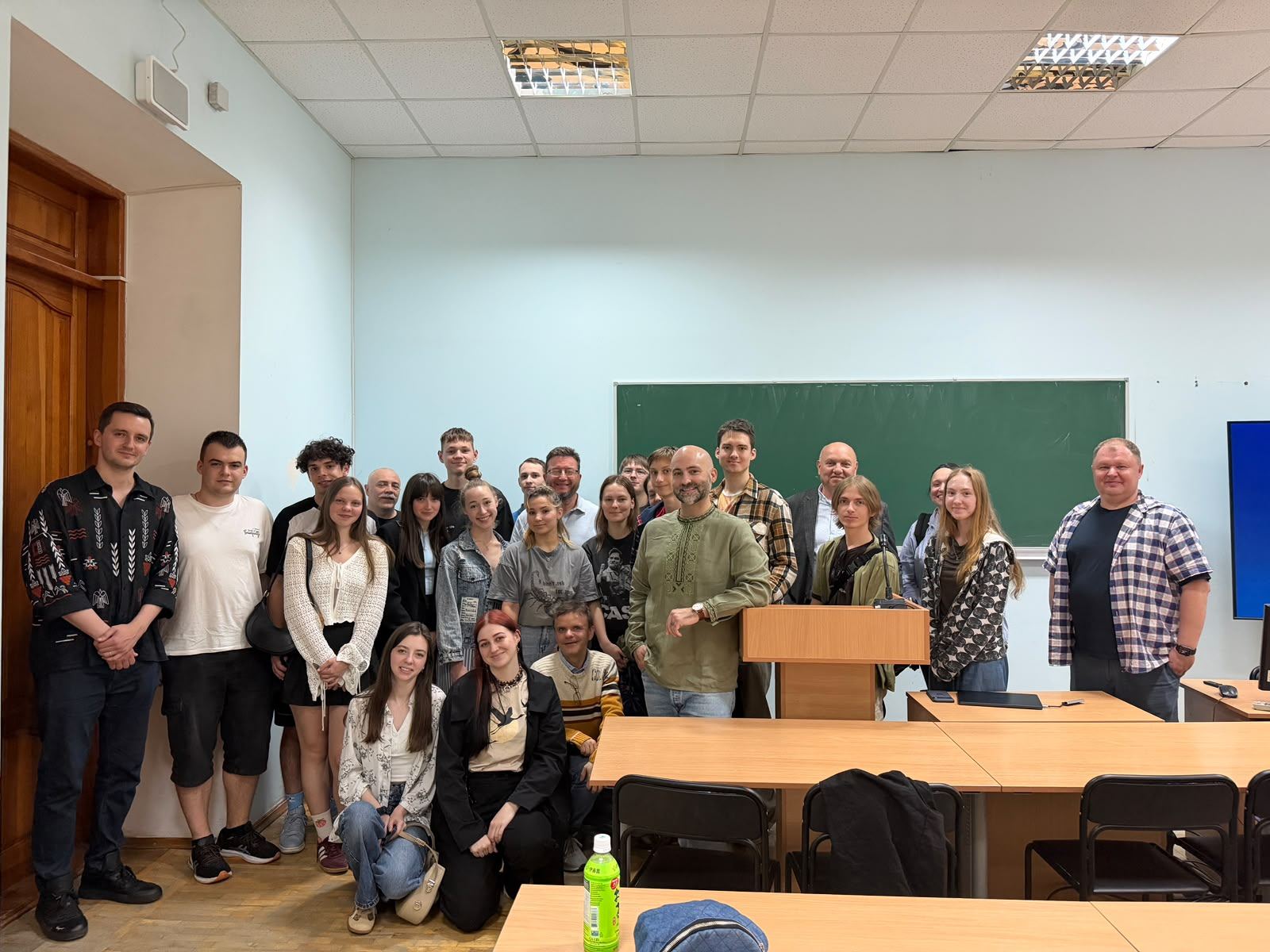
Paul Sutter and Igor Pomaz with students and faculty in a classroom at Kyiv-Mohyla Academy
Paul Sutter and Igor Pomaz with students and faculty at Kyiv-Mohyla Academy, June 2026.

Who we are

An American scientist and a Ukrainian lawyer

Paul Sutter is an astrophysicist at Johns Hopkins University. Igor Pomaz is a lawyer in Kyiv. They founded the initiative in 2026 and run it as volunteers.

Paul works with American scientists, universities and companies. Igor works with Ukrainian institutions, officials and businesses. Every project has a partner on each side.

Read more about us

Our first months

What has happened so far

  1. June

    The Office of the President of Ukraine supports the initiative. Ukrainian ministries open their doors to the work.

  2. July

    Senior American water experts form an advisory group for Ukrainian water utilities. Four Ukrainian universities begin designing programs with us.

  3. August

    Drexel University agrees to explore a program with Kyiv Polytechnic Institute.

  4. September

    The water panel holds its first sessions with Ukrainian water authorities and sends written guidance. Drexel University sends a letter of interest for a program with Kyiv Polytechnic Institute.

  5. October

    We start recruiting American professors to teach at Ukrainian universities.

Questions people ask

New to us? Start here.

Are you a funder?

No. We are matchmakers. We find the right partners on each side, vet them, make the introduction, and help put together the funding a project needs. We do not give grants.

Are you part of a government?

No. We are an independent volunteer initiative. We work with the recognition and support of the Office of the President of Ukraine, and we are not part of the US or Ukrainian government. Our work does not depend on any single government program.

Do you work on military projects?

No. Every project serves a civilian need, such as water, energy, education or research.

Do Ukrainian students stay in the United States?

No. Students stay enrolled at their Ukrainian university the whole time. They spend one semester in the United States, earn course credit, and return home to write the thesis and receive a Ukrainian degree. They travel on an exchange visa that requires them to go home.

Who pays for the projects?

Each project has its own mix of funders. That can include private foundations, development banks, companies that bring their own technology, and aid from allied governments. We do not ask the Government of Ukraine for money.

How are you different from Fulbright and other programs?

Programs like Fulbright do important work, and each handles a particular kind of project. We start from a specific Ukrainian need, then look for whatever American help fits it. That lets us reach problems that fall between existing programs.

Can you help?

We are looking for universities, professors, engineers, companies and sponsors.

Get involved